
Electronic Load Meter
Atorch Electronic Load Meter represents precision and versatility in power testing, offering features like intelligent temperature control, multi-mode operation, and robust safety measures. Ideal for battery testing, voltage regulation, and energy evaluation, its innovative design ensures efficiency, reliability, and adaptability across diverse industrial applications.
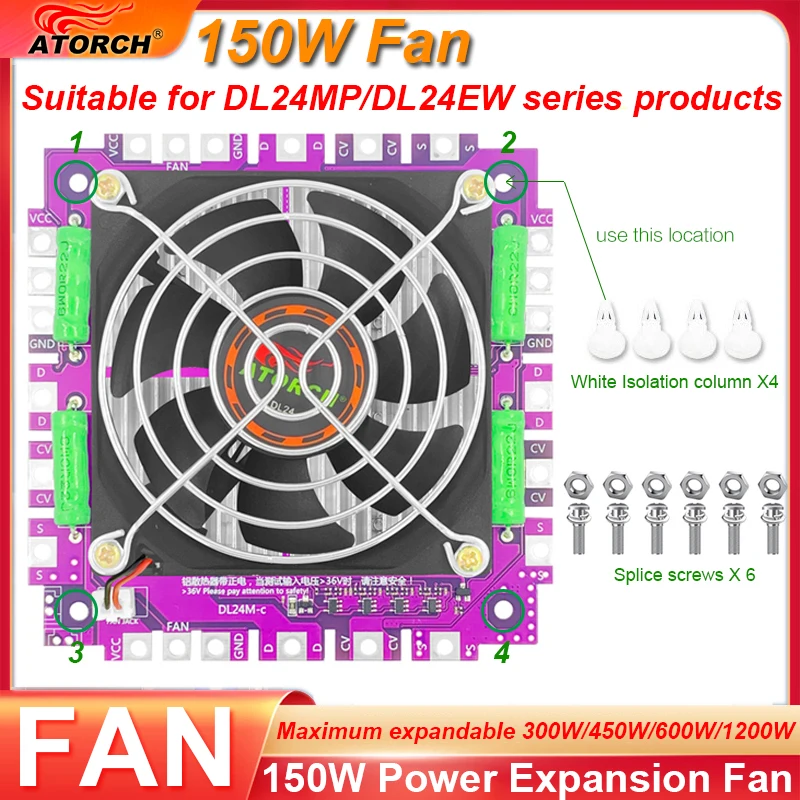
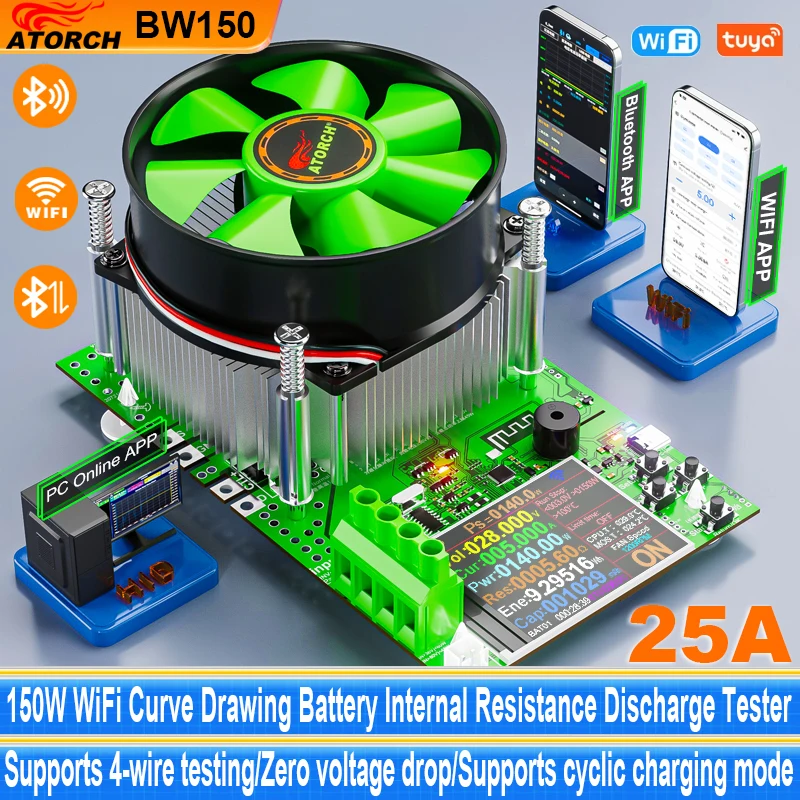


Innovative Technology Behind Atorch Electronic Load Meter
The Atorch Electronic Load Meter stands at the forefront of cutting-edge technology, offering reliable and efficient solutions for voltage, current, and power testing. Built upon an advanced architecture, the load meters utilize wide-range DC-DC buck/boost converters combined with high-wattage resistors to ensure seamless operation. This innovative design dissipates most of the power through resistors rather than MOSFETs, thereby enhancing durability and efficiency By integrating linear MOSFETs equipped with a comprehensive safe operating area for voltage and current, the Atorch Electronic Load Meter delivers unparalleled accuracy and safety, ensuring broad compatibility with various applications and testing scenarios
Versatile Features of Atorch Electronic Load Meter
Atorch Electronic Load Meters offer exceptional versatility, fitting a wide range of operational needs through multiple discharge modes such as constant current, constant resistance, constant power, and constant voltage. Users can benefit from smart features, including intelligent temperature-controlled fans and triple-safety protections against overcurrent, overvoltage, and overheating. Additionally, the meters support dual-wire connections and external temperature probes for internal-external temperature measurements, enabling utilization across diverse industrial and experimental settings For convenience, the Atorch Electronic Load Meter features a user-friendly interface and compatibility with Android, iOS, and PC applications, making remote and real-time performance monitoring accessible to all users
Benefits of Integration with Atorch Electronic Load Meter
Equipped with multiple practical advantages, the Atorch Electronic Load Meter ensures cost-effectiveness and scalability for various industries. By integrating into battery testing, DC power adaptation, and voltage regulation testing, this equipment supports energy savings and improves productivity. The inclusion of modular designs with built-in fuses and larger MOSFET arrangements prevents thermal mismanagement, ensuring sustained operations even under high-power loads. Its improved heat dissipation via custom-designed heatsinks further optimizes performance, while connectivity with logging software via Bluetooth and USB enhances data tracking for long-term analysis
Diverse Applications of Atorch Electronic Load Meter
The multifunctionality of Atorch Electronic Load Meter makes it indispensable for electronics enthusiasts, professionals, and researchers. It facilitates online testing, discharge, and charge measurements of batteries, making it ideal for renewable energy evaluations or electronic component stress testing With a significant power handling capacity of up to 200V and current limits up to 20A, the Atorch Electronic Load Meter is particularly suitable for monitoring high-capacity batteries, electronics thermal properties, and portable power solutions. Its robust build ensures effectiveness across both laboratory and field conditions
Commitment to Excellence Through Atorch Electronic Load Meter
In embracing continuous innovation, Atorch constantly redefines the utility of load meters by introducing seamless upgrades to address modern demands. From compact designs to enhanced operational ranges, the Atorch Electronic Load Meter is a testament to the company’s focus on quality and user-centric engineering. By prioritizing accessibility, durability, and precision, Atorch products empower users in a variety of fields, from education and automotive testing to industrial calibration. With this dedication, Atorch Electronic Load Meters continue to serve as critical tools for advancing technological exploration and industrial benchmarks across the globe